Invest in Quality Containers
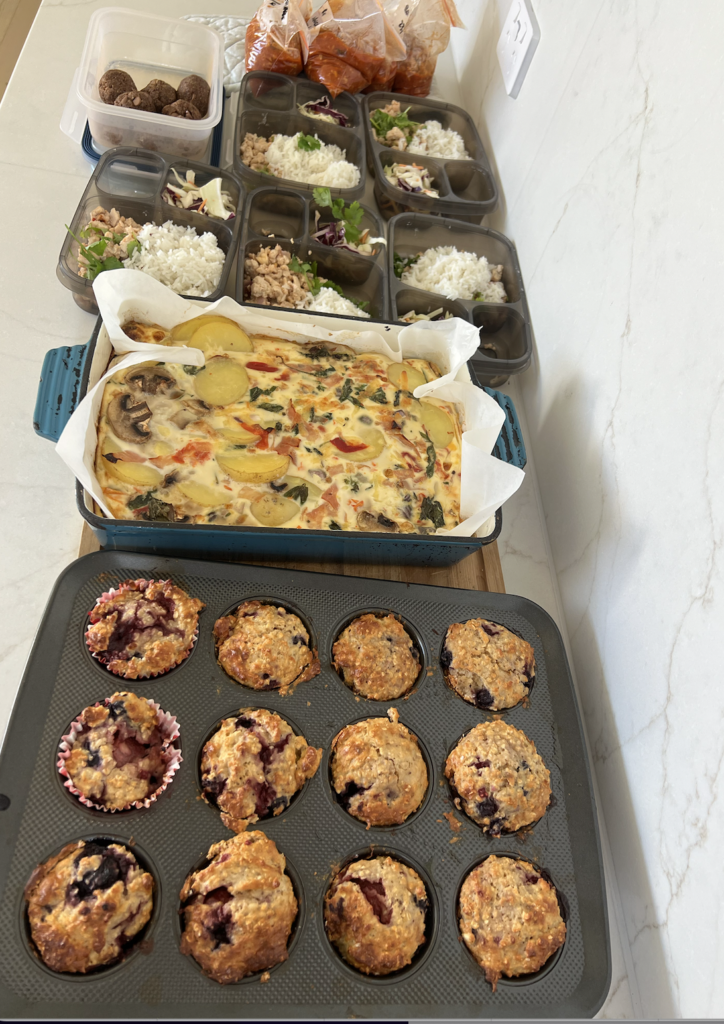
Want to look forward to your meals? Start with the right containers! Choose high-quality, BPA-free, microwave-safe, secure, leak-proof lids—because nobody wants a lunch bag disaster. I personally swear by glass containers; they last longer, don’t harbour smells, and you can even use them in the oven. The ones I grabbed from Amazon are fantastic—they’re oven-safe, perfect for making sheet-baked pancakes or frittatas. Plus, investing in good containers saves you money and hassle in the long run.
If you are after some great glass containers- HERE are some I love from Amazon.
2. Portion and Label Your Meals
While I sometimes store meals in bulk (like a big family dinner), I usually portion out individual meals right away. It’s a great time-saver and helps with eating just the right amount. A kitchen scale can help you divide your meals accurately. Adjust your portions according to your dietary goals—whether you’re losing weight, maintaining, or bulking up. Add more fats or fiber-rich veggies as needed. And don’t forget to label each container with the meal type and the date you made it to keep track of freshness.
3. Allow Food to Cool Properly
Avoid putting hot food directly in the fridge. It can cause condensation, leading to moisture buildup and bacteria growth. Let your cooked meals cool down to room temperature for about 30 to 60 minutes before refrigerating or freezing. This also prevents warming up other foods nearby.
4. Mind Your Refrigerator and Freezer Storage
Do you consider how and where you store items in your fridge? Keep your fridge set at 4°C (40°F). Store prepared meals on the shelves, not the door, as the temperature there can fluctuate. Keep cooked and raw foods separate to prevent cross-contamination. Store leafy greens in an airtight container with a damp paper towel to keep them fresh. Use your freezer for backup meals—freeze in appropriate containers or wrap food well to prevent freezer burn. I love freezing part of a big meal like a casserole or lasagna for later use.
5. Pro Tips for Reheating
Reheating is an art! The microwave is your friend here, enabling quick reheating while preserving the flavour of your food. Always use microwave-safe containers and cover your food with a microwave-safe lid or a damp paper towel to maintain moisture. Reheat in short bursts, stirring in between to ensure even heating.