Strength training comes with its own quiet language. Once you learn to speak it, your sessions suddenly feel more intentional, more precise and far more effective. Whether you’re brand new to lifting or simply ready to level up, understanding intensity and how to self-select weights is one of the most powerful skills you can develop.
This guide breaks down exactly what intensity means, how we measure it and how to choose the right weight on any given day, in any program.
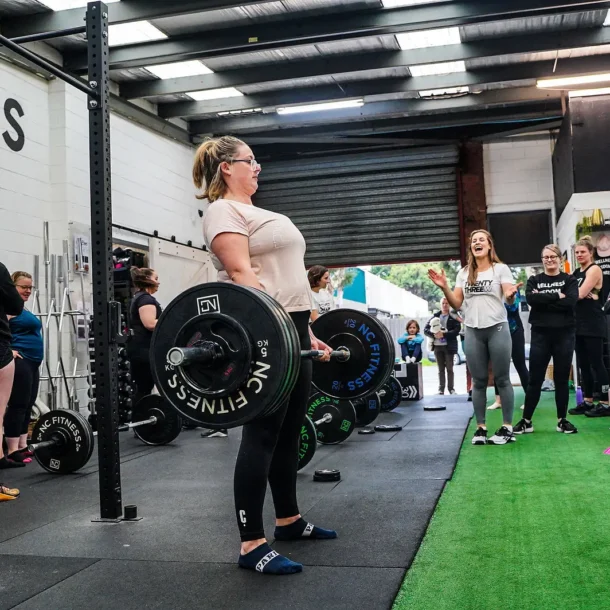
When you see “INTENSITY” in your training notes or hear your coach cue it, it refers to how hard you’re working during a set. In strength training, intensity is usually expressed in load. More weight equals higher intensity.
Two simple tools help you gauge this: RPE and RIR.
RPE is a scale from 1 to 10 that describes how challenging a set feels.
5–6 RPE (Warm-Up Effort): The movement is moderate. You can hit the programmed reps and still have roughly 25% left in the tank. If you’ve got 10 reps, you could punch out 2–3 more without your form faltering.
8–9 RPE (Working Zone): Tough but controlled. You’re pushing the body and prompting adaptation.
10 RPE (Max Effort): Your final rep is extremely difficult but still clean. This is “everything you’ve got.”
Across a well-designed program, your RPE will intentionally rise week to week to support progressive overload and strength gain.
RIR is RPE’s mirrored twin. Instead of rating how a set feels, it reflects how many reps you could have done beyond what you completed.
0 RIR = 10 RPE: Nothing left in the tank.
2 RIR: You finish your set knowing you could’ve hit two more reps with solid form.
Both scales help lifters of all levels match their effort to the purpose of their program.
Choosing the right weight takes a little exploration. You’re not meant to nail it perfectly every time. The goal is to land within the correct intensity range, not to predict the exact load from the get-go.
A few questions to ask yourself mid-set:
Does the final rep feel challenging but doable?
Am I maintaining good form?
Did I undercook or overcook it? If yes, adjust.
Strength training works best with curiosity, not ego.
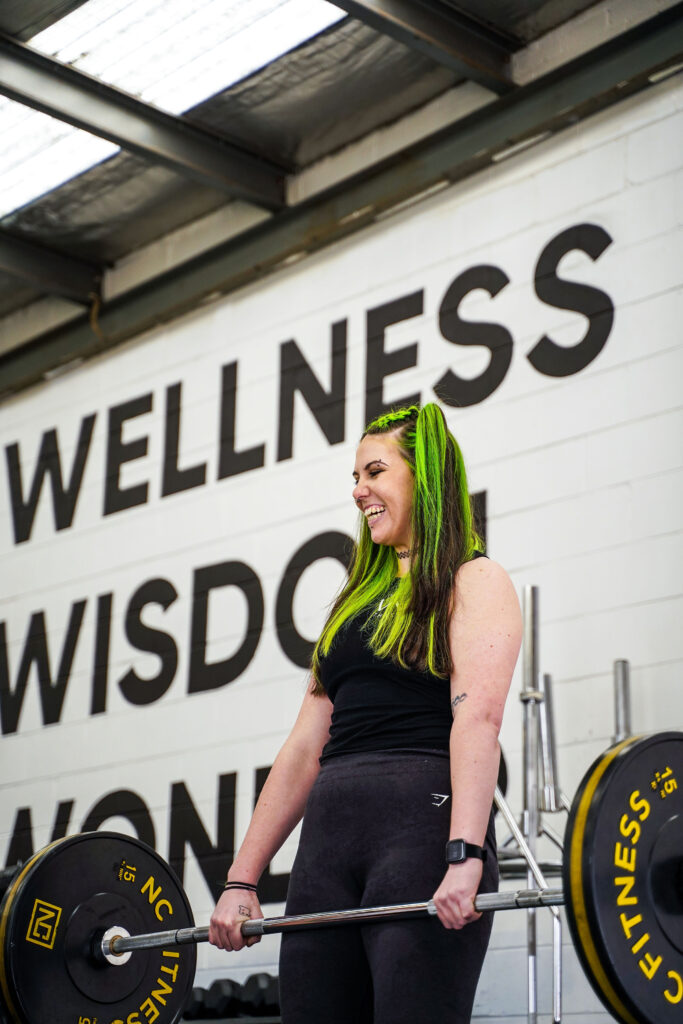
You’re standing in front of the dumbbell rack wondering What should I use? Perfect—this is where intention starts.
Your program will list RPE or RIR targets for each block. These tell you exactly how hard the set should feel.
RPE 5–6 / RIR 4–5: Warm-up territory, building quality movement.
RPE 8–9 / RIR 1–2: Working sets with purpose.
RPE 10 / RIR 0: Maximal intensity. It’s a tool, not a lifestyle—form breakdown often outweighs the benefit of living here.
Especially with new movements, go in expecting to adjust.
If the weight is too light, you’ll breeze through with no challenge.
If it’s too heavy, your form will tell you before your coach does.
The sweet spot is challenging, controlled and aligned to your target intensity.
As you get stronger, the same load will feel easier. That’s your cue to level up. Increasing weight gradually—while staying in the programmed intensity zone—is progressive overload in action. It’s also how you build muscle, improve performance and keep training interesting.
And yes, you can track all of this in the 23W Training App. Your future self will thank you.
If you’re unsure about loading, intensities or technique, we’re always happy to help. Email Ange at ange@23w.com.au with your lifting questions.
Train smart, stay curious and keep showing up.

Ange Drake is a personal trainer, women’s empowerment coach and fitness blogger in the northern suburbs of Melbourne. She is the director of one of the few womens’ only strength training gyms in Melbourne, 23W. Ange helps women to learn how to use strength based training, nutritional strategies and a positive mindset to transform their bodies, relationship with food and mind.