This weekend I had one of my sisters come to stay. She’s in her 50s, and as sisters do, we covered a LOT of ground over the weekend.
One of the conversations we kept coming back to was training, protein, food and the changes she’d started noticing in her body.
And I realised how bloody confusing this space has become for women.
Because if you’re in your 40s or 50s and noticing that your body doesn’t look or respond quite like it used to, the internet will happily tell you that your hormones have destroyed your metabolism and you now need a menopause-specific diet, fasting protocol, supplement stack and completely different way of exercising.
You don’t.
But there are changes happening, and I think understanding them makes it much easier to know what to actually focus on.
As we age, maintaining muscle becomes harder. We naturally become more vulnerable to losing lean mass, particularly if we aren’t doing anything to actively preserve it.
At the same time, the hormonal changes associated with menopause can influence where we store body fat, with a greater tendency towards abdominal and visceral fat.
Then layer in everything else that often comes with this stage of life, disrupted sleep, stress, changes in appetite, less incidental movement, busy careers and families, and it’s not surprising that a lot of women start to feel like their body has changed underneath them.
This is why I think the conversation needs to move away from simply “How do I weigh less?”
We want to think about body composition.
How much muscle are you carrying? How much body fat? Are you strong? Are you maintaining bone density? Are you metabolically healthy? And what can we do now that will serve the body you want to have in your 60s, 70s and beyond?
And this is where diet and training become incredibly powerful.
Not with a detox. Not by removing carbohydrates. And definitely not by trying to overhaul your entire life on Monday. Start here.
This was probably the biggest conversation I had with my sister over the weekend.
Protein gives us the building blocks to maintain and build muscle. And as we age, getting enough of it becomes increasingly important.
A really simple starting point is to aim for a meaningful protein source at every main meal, roughly 25–35g.
Chicken, fish, eggs, Greek yoghurt, cottage cheese, lean meat, tofu, legumes or a protein shake can all help.
And don’t get sucked in by everything labelled HIGH PROTEIN. Look at how much protein you’re actually getting relative to the calories in the food.
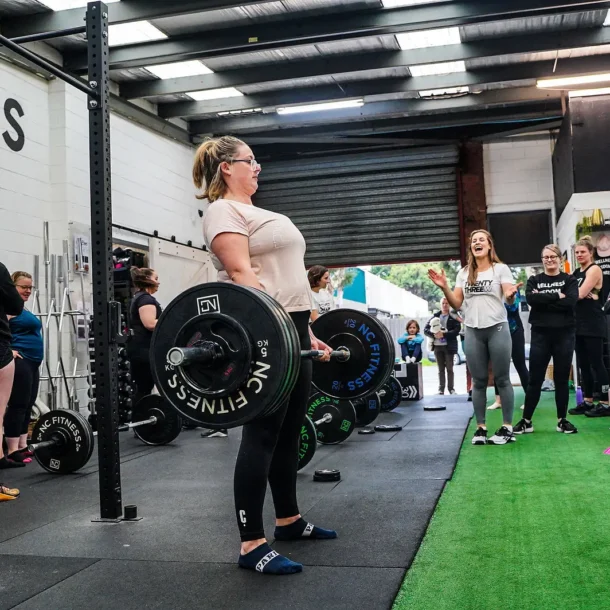
If there was one form of exercise I wanted every woman in her 40s, 50s and beyond doing, it would be progressive strength training.
And by strength training, I mean giving your muscles a reason to adapt.
The weights need to become challenging. Exercises need to be progressed over time. You want to squat, hinge, push, pull, carry and move your body through different planes.
We’re not just exercising to burn calories.
We’re training to protect muscle, build strength, support our bones and maintain our physical capacity as we age.
That is a very different goal.
This is the part that often gets lost in conversations about hormones.
Hormones absolutely matter. They can influence appetite, energy expenditure, fat distribution, sleep and how we feel.
But they don’t make energy balance irrelevant.
If your goal is to reduce body fat, you still need to consume slightly less energy than your body uses over time.
That doesn’t mean eating 1,200 calories or spending your life hungry.
It means understanding that foods can be nutritious and still very energy dense, and that simply adding protein foods, healthy fats, smoothies and supplements on top of what you’re already eating isn’t necessarily going to improve body composition.
Think small, sustainable changes, not aggressive dieting.
You don’t need to smash yourself with cardio every day.
Walk. Get outside. Take the stairs. Keep your steps up.
Train a couple of times per week and then look for opportunities to move your body throughout the rest of your day.
That incidental activity adds up enormously over weeks, months and years.
This is probably the biggest one. There isn’t one.
There are absolutely individual considerations during perimenopause and menopause, and symptoms can significantly affect training, recovery, nutrition and quality of life.
But before worrying about the tiny details, ask yourself:
Am I strength training consistently?
Am I eating enough protein?
Am I eating an appropriate amount for my goals?
Am I moving regularly?
Am I doing this consistently enough to actually see what happens?
Because sometimes we become so distracted looking for the advanced solution that we haven’t yet nailed the basics.
My sister went shopping after our weekend together and came home with a trolley full of things with more protein in them 😂
And I love that.
Not because protein is some magical solution to menopause, but because it’s one small behaviour she can start practising now.
That’s where I’d encourage any woman feeling overwhelmed by changes in her body to begin.
You don’t need to fix everything this week.
Lift weights. Eat enough protein. Be mindful of how much you’re eating. Move your body.
At the same time, don’t be gaslit to think it is all in your head! If you are experiencing concerns that are affecting daily life, chat to your GP about hormonal therapies that could support the transition.
What to take a deep dive? DOWNLOAD OUR PERIMENOPAUSE CHECKLIST.

Ange Drake is a personal trainer, women’s empowerment coach and fitness blogger in the northern suburbs of Melbourne. She is the director of one of the few womens’ only strength training gyms in Melbourne, 23W. Ange helps women to learn how to use strength based training, nutritional strategies and a positive mindset to transform their bodies, relationship with food and mind.