Thinking about doing Body Pump because you know you “should” be strength training? You’re not alone.
I have this conversation all the time with women who are motivated to train, ready to feel strong again, and aware that strength training is important… but unsure where to start.
Often, Body Pump comes up as the logical choice.
It has weights.
It’s structured.
It has a timetable.
You show up, someone tells you what to do, and you feel like you’ve done something good for your body.
And to be clear, there are positives.
But if your goal is body recomposition, improved metabolic health, or building muscle as you move through your 40s and beyond… it’s important to understand the difference between lifting weights and strength training.
Because they are not the same thing.
Most women aren’t choosing Body Pump because they specifically want very high repetition barbell work.
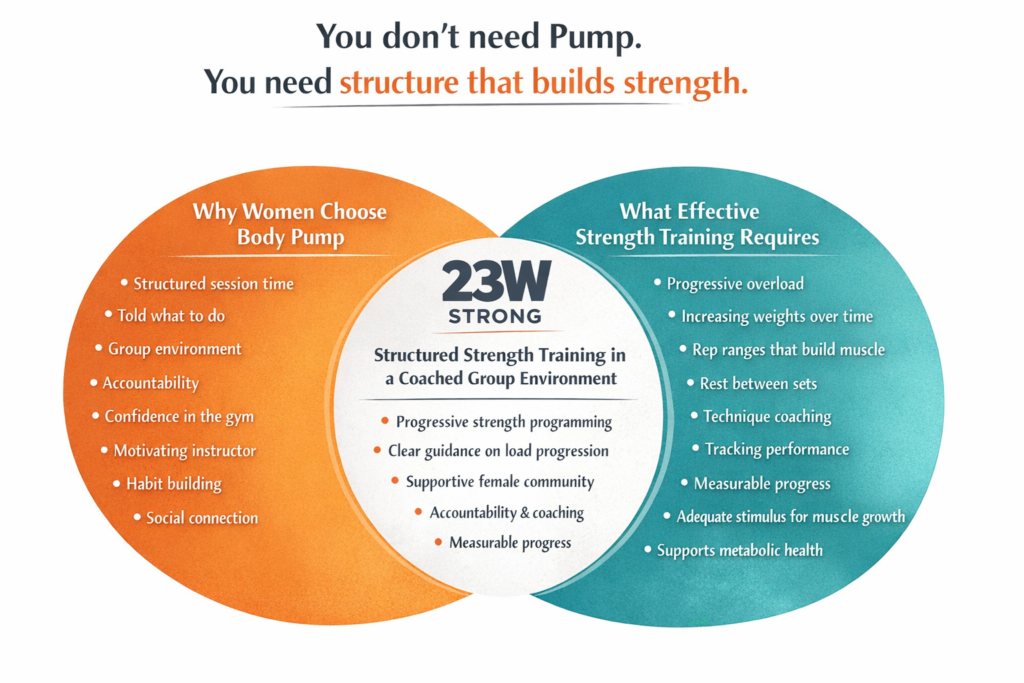
They’re choosing it because they want:
And these are all valid needs.
Especially if you are:
The problem isn’t that women are choosing classes.
The problem is that many classes aren’t actually designed to build strength progressively over time.
And that matters more than ever as hormones change.
As oestrogen levels begin to fluctuate and gradually decline, we see changes in:
• muscle mass
• bone density
• insulin sensitivity
• fat storage patterns
• recovery capacity
Muscle becomes harder to build… and easier to lose.
And muscle is incredibly important for metabolic health.
Muscle plays a key role in helping move glucose out of the bloodstream and into the cell where it can be used for energy. The more muscle tissue we maintain, the more efficiently the body can regulate blood sugar levels.
This is one of the reasons strength training is so powerful for long term health, energy, body composition and confidence.
But the type of strength training we do matters.
Because not all lifting creates the same stimulus.
Body Pump style classes tend to focus heavily on muscle endurance.
That usually looks like:
Muscle endurance training.
This can feel challenging — but feeling challenged is not the same as creating the right stimulus to build muscle.
Strength training, on the other hand, is structured differently.
Strength training
Strength training isn’t about how exhausted you feel at the end of the session.
It’s about whether the body has been given a reason to adapt.
Without progression, the body has no reason to change.
If your goal is strength, here are some simple checkpoints:
If you’re using the same plates or dumbbells month after month, your body has likely already adapted to that load.
Strength requires progression.
If there is no record of what you lifted last week, it becomes very difficult to progressively overload the muscles.
Progress becomes guesswork.
If every set leaves you breathless and rushing, there may not be enough load or recovery to stimulate muscle growth.
Strength training requires both effort and recovery.
Sweat and fatigue can feel productive — but they aren’t the same as adaptation.
The body adapts quickly. Without variation or progression, results plateau.
Group environments can be incredibly powerful.
They help with consistency.
They create community.
They remove decision fatigue.
They give you a place to show up.
But for strength results, the program itself must be designed to progress.
This is where many traditional group strength formats fall short.
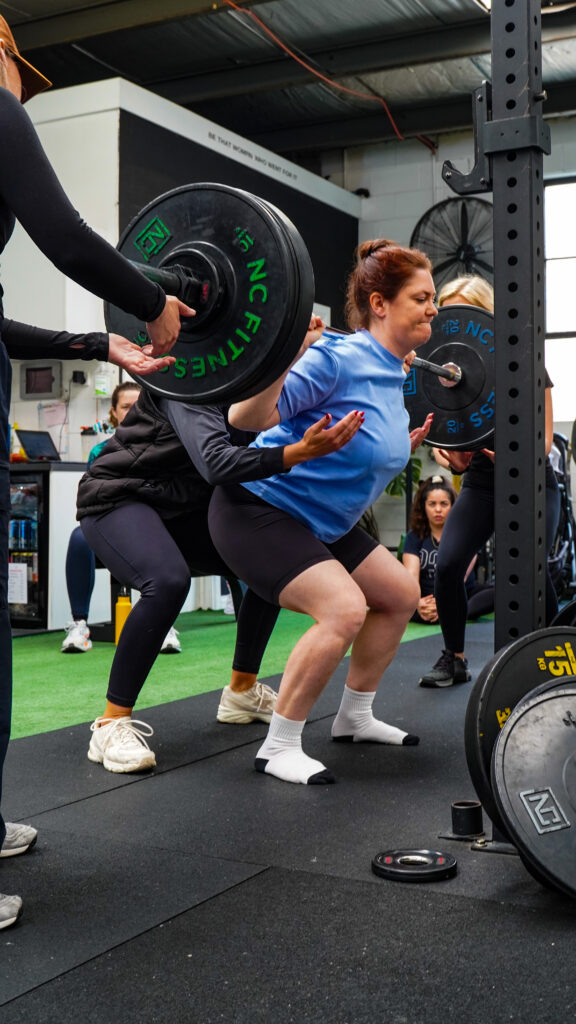
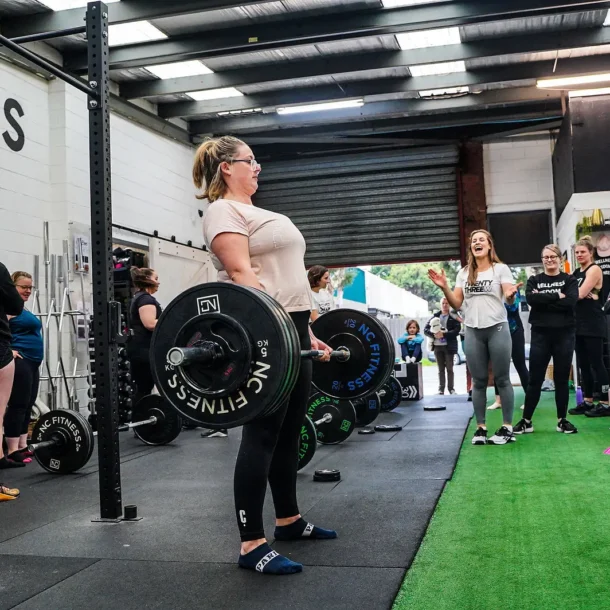
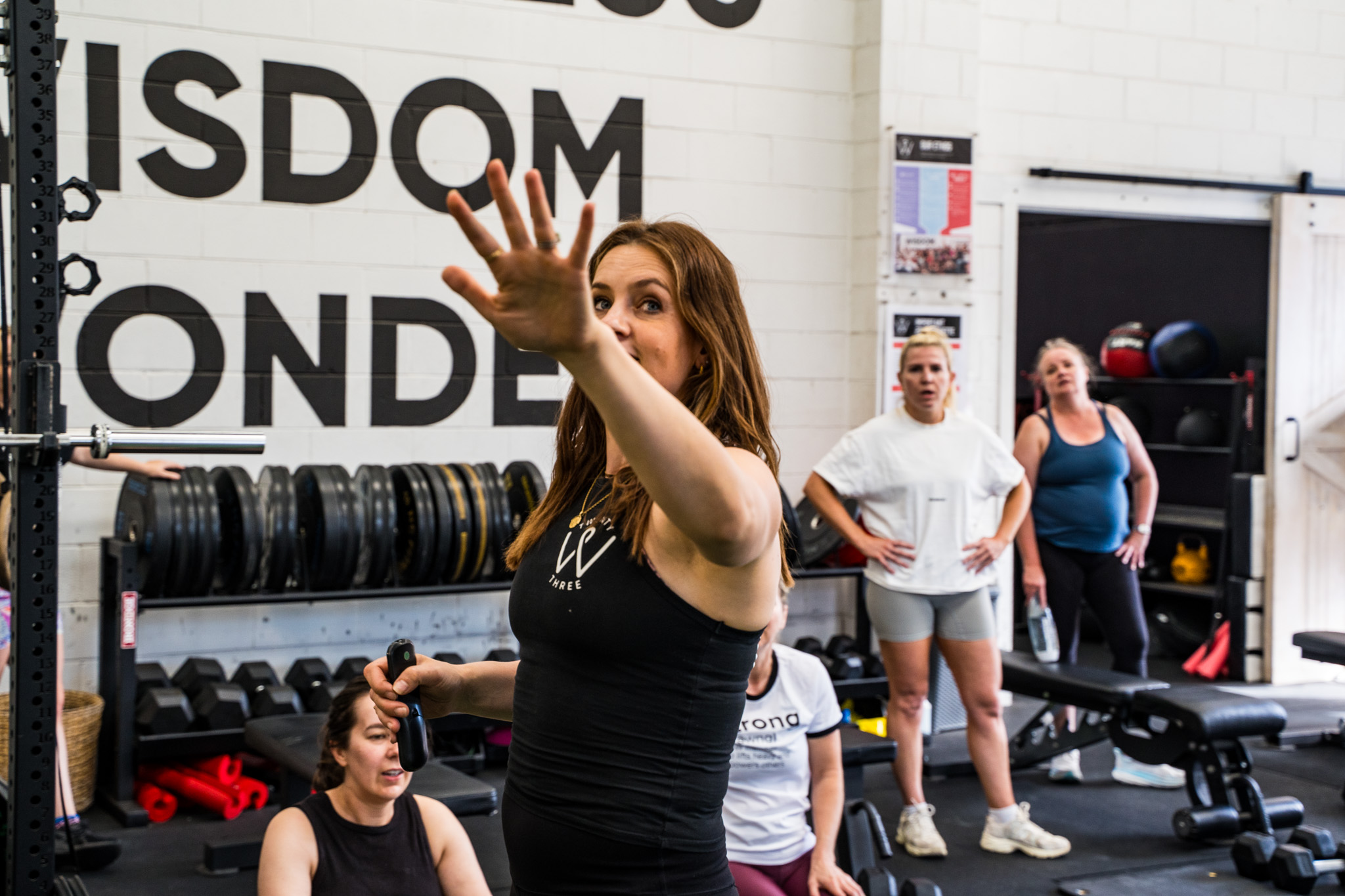
At 23W, our Strong program is designed specifically to provide real strength training within a supportive group environment.
Because women don’t just need access to weights.
They need structure that supports progression.
Our Strong sessions are built around:
We use programming blocks that allow women to gradually increase load, improve skill, and see measurable progress over time.
You still get:
But with a program designed to support long term strength development and body recomposition.

Ange Drake is a personal trainer, women’s empowerment coach and fitness blogger in the northern suburbs of Melbourne. She is the director of one of the few womens’ only strength training gyms in Melbourne, 23W. Ange helps women to learn how to use strength based training, nutritional strategies and a positive mindset to transform their bodies, relationship with food and mind.