
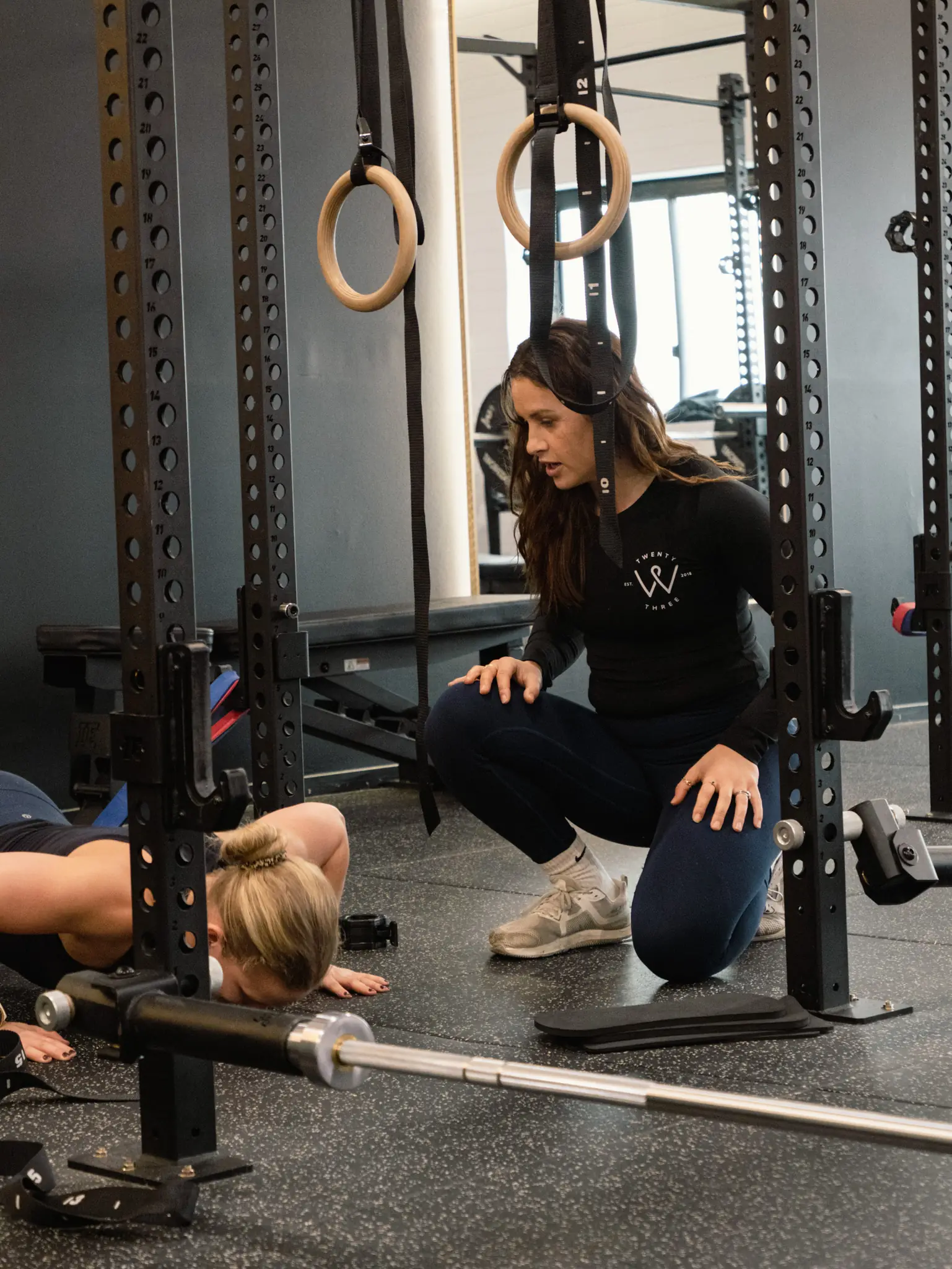
Why building and maintaining muscle in your 40s and beyond is about so much more than the way your body looks.
One of the most common things I hear from women entering their 40s is:
“I feel like my body has changed overnight.”
Suddenly, their clothes fit differently. They’re carrying a little more body fat around their middle. Their muscle definition isn’t quite what it used to be. And despite eating and exercising in ways that have always worked for them, their body doesn’t seem to respond in the same way.
It’s easy to put this down to age or hormones. And while hormonal changes during perimenopause absolutely play a role, there’s a much bigger physiological picture worth understanding.
For many women, what feels like a sudden change is actually the accumulation of small changes over many years.
A little less muscle mass. A little more body fat. Less progressive strength training. Changes in dietary habits, recovery, sleep, stress and daily movement.
Individually, these changes may be almost impossible to notice.
But eventually, they reach a point where the cumulative difference becomes much more obvious.
I often describe this as reaching a critical point. Not because there’s a specific biological threshold where everything suddenly changes, but because years of small changes can eventually become visible all at once.
And here’s what I want more women to understand:
Building and maintaining muscle through your 40s, 50s and beyond is one of the most important investments you can make in your metabolic health, body composition, bone density and long-term physical independence.
1. What’s actually happening to our body composition in our 40s?
Body composition refers to the proportion of fat mass and fat-free mass in our bodies. Fat-free mass includes muscle, bone, organs and water.
Two women can weigh exactly the same amount but have very different body compositions.
One may have a greater proportion of skeletal muscle, while the other carries a higher proportion of body fat.
Their scale weight might be identical, but their strength, physical capacity, glucose regulation and metabolic health can be quite different.
As women move through midlife, several physiological changes can influence this balance.
The menopause transition changes how we store fat
Estrogen plays a role in regulating fat distribution, energy balance and aspects of muscle and metabolic function.
As estrogen levels fluctuate and eventually decline through the menopause transition, many women experience a shift towards greater abdominal fat storage.
This includes an increase in visceral adipose tissue, fat stored deeper within the abdominal cavity, surrounding internal organs.
Unlike subcutaneous fat, which sits directly beneath the skin, excess visceral fat is more strongly associated with insulin resistance, cardiovascular disease and metabolic dysfunction.
Importantly, these changes can occur even when total body weight remains relatively stable. A woman may not have gained much weight, but she may have lost lean tissue and gained fat mass. This is one reason the scales don’t always tell the full story.
What does the research show?
One particularly interesting study comes from the Study of Women’s Health Across the Nation (SWAN), which followed women through the menopause transition.
Researchers found that around the onset of the menopause transition:
The rate of fat mass gain approximately doubled.
Lean mass began to decline.
These changes continued until approximately two years after the final menstrual period.
Overall body weight did not show the same acceleration.
In other words, body composition was changing even though the trajectory of total body weight wasn’t dramatically different. This is such an important distinction.
The issue isn’t always how much weight a woman gains. It’s what that weight is made up of, where fat is stored, and how much functional muscle she maintains.
2. Muscle loss doesn’t begin at menopause
We often associate muscle loss with ageing, but the process can begin well before menopause.
Age-related reductions in muscle mass, strength and physical performance are influenced by multiple factors, including:
Reduced physical activity and mechanical loading.
Changes in muscle protein synthesis and the response to dietary protein.
Hormonal changes.
Inadequate protein or total energy intake.
Chronic illness and periods of inactivity.
Changes in neuromuscular function.
Muscle loss is not inevitable at a fixed rate, and it doesn’t happen equally to everyone. In fact, resistance training can preserve muscle and strength remarkably well into older age.
One concept worth understanding is anabolic resistance. This describes a reduced muscle-building response to a given stimulus, such as a protein-containing meal or resistance training session.
It becomes more relevant with advancing age, particularly in older adults, but inactivity can also contribute. The practical implication is that the stimulus we provide our muscles matters.
Simply remaining active isn’t necessarily the same as providing enough resistance to maintain or increase muscle mass.nWalking, Pilates, cycling and cardiovascular exercise all have benefits. But if we want to maintain and build skeletal muscle, we need to give our bodies a reason to keep it. And that means progressively challenging our muscles through resistance training.
3. Muscle is one of our most important metabolic tissues
When most people think about muscle, they think about strength, shape or definition.
But skeletal muscle is also a major metabolic organ.
It plays a central role in how we take up glucose from the bloodstream, store carbohydrates, respond to insulin and use energy during movement.
Muscle is a major destination for glucose
When we eat carbohydrates, they’re broken down into glucose, which enters our bloodstream. In response, insulin helps regulate blood glucose by signalling tissues to take up and store glucose. Skeletal muscle is one of the most important destinations for this glucose.
Under insulin-stimulated conditions, skeletal muscle can account for approximately 70–80% of glucose disposal.
That is a substantial contribution. And it helps explain why maintaining healthy, functional muscle is so important for long-term metabolic health.
How does glucose actually enter muscle?
Muscle cells contain a glucose transporter called GLUT4. GLUT4 helps move glucose from the bloodstream into muscle cells. There are two particularly important pathways involved.
1. Insulin-stimulated glucose uptake
After a meal, insulin binds to receptors on muscle cells and activates signalling pathways that move GLUT4 transporters towards the cell membrane. These transporters allow glucose to enter the muscle.
Once inside, glucose can be used to produce energy or stored as glycogen.
2. Exercise-stimulated glucose uptake
Muscle contractions can also stimulate GLUT4 movement through pathways that are partly independent of insulin. This means that when we exercise, our muscles can increase glucose uptake even without relying entirely on the usual insulin-signalling pathway. It’s one of the reasons exercise can improve glucose regulation.
Regular resistance training also improves aspects of insulin sensitivity, meaning our bodies can become more effective at responding to insulin.
More muscle means greater potential glycogen storage
Muscle stores carbohydrates in the form of glycogen. Glycogen is a readily available energy source during exercise, particularly when training at higher intensities. Having more muscle generally provides a greater total capacity for muscle glycogen storage, although actual storage depends on diet, training status and how full those stores are.
This doesn’t mean carbohydrates can never be stored as fat if you have more muscle. But it does mean muscle plays a significant role in how our bodies manage and use the energy we consume.
Muscle isn’t simply tissue that moves us. It’s tissue that helps us manage fuel.
4. Does having more muscle actually increase your metabolism?
Yes. But probably not by as much as you’ve been led to believe. This is one of the most misunderstood aspects of muscle and metabolism.
You’ve probably heard claims that every kilogram of muscle burns an extra 50 or even 100 calories per day. Unfortunately, those numbers significantly overestimate resting energy expenditure.
The scientific estimates are considerably more modest. At rest, one kilogram of skeletal muscle uses approximately 13 calories per day.
By comparison, one kilogram of adipose tissue uses approximately 4.5 calories per day. That means muscle uses roughly three times as much energy per kilogram as fat tissue at rest. But let’s put that into perspective.
If you build 3 kg of additional skeletal muscle, that muscle would use approximately 39 calories per day at rest. If you replace 3 kg of fat with 3 kg of muscle, the net increase in resting energy expenditure attributable to those tissues would be approximately 25.5 calories per day.
Not hundreds of calories. And that’s an important distinction.
So why is muscle so valuable for energy expenditure?
Because resting metabolism is only one part of the equation.
Total daily energy expenditure includes:
Resting metabolic rate: Energy required to sustain basic physiological functions.
Exercise activity: Energy used during structured training and sport.
Non-exercise activity thermogenesis (NEAT): Energy used during daily movement, including walking, standing and household activities.
Thermic effect of food: Energy required to digest, absorb and process nutrients.
Having more muscle can support our ability to train harder, move more effectively and sustain higher levels of physical activity.
Resistance training itself requires energy. Recovering from training also requires energy, although this additional expenditure is variable.
The long-term benefit isn’t that muscle magically turns us into calorie-burning machines while we sit on the couch. It’s that muscle supports the physical capacity and metabolic function that help us maintain a healthier body composition over time.
5. Why body fat distribution matters as much as body fat percentage
Not all body fat carries the same metabolic implications.
Subcutaneous fat is stored beneath the skin and serves important physiological functions, including energy storage, insulation and endocrine signalling. Visceral fat is stored around internal organs.
Higher levels of visceral fat are associated with increased cardiometabolic risk. This is partly because visceral adipose tissue is metabolically active and can contribute to inflammatory signalling, altered lipid metabolism and impaired insulin sensitivity.
During the menopause transition, declining estrogen can favour greater central fat accumulation.
This is why some women notice that their body shape changes even without a significant increase in body weight.
It’s also why our approach to midlife health needs to move beyond simply trying to weigh less.
We need to think about preserving muscle, managing excess visceral fat, maintaining cardiovascular fitness and supporting metabolic health.
Resistance training is an important part of that strategy, alongside adequate nutrition, aerobic activity, sleep and stress management.
6. Muscle, osteopenia and osteoporosis: the long-term investment
One of the most important reasons I encourage women to strength train is something we can’t necessarily see in the mirror.
Our bones. Bone is living tissue that continually undergoes remodelling.
Specialised cells called osteoclasts break down older bone, while osteoblasts help form new bone.
This process is influenced by hormones, nutrition, mechanical loading and ageing.
Estrogen plays an important role in maintaining bone balance.
Following menopause, declining estrogen increases bone resorption, and bone breakdown can exceed bone formation.
Over time, this can contribute to declining bone mineral density.
What’s the difference between osteopenia and osteoporosis?
Osteopenia describes lower-than-normal bone mineral density that has not reached the diagnostic threshold for osteoporosis.
Osteoporosis involves more substantial deterioration in bone strength and an increased risk of fragility fractures.
Both are particularly relevant to women as they age.
How does strength training help?
Bones respond to mechanical loading.
When muscles contract and pull on bones, they generate forces that stimulate bone tissue.
Weight-bearing and resistance exercises expose the skeleton to mechanical loads that can help maintain or improve bone strength.
This is sometimes described through the principle of mechanotransduction — the process by which cells detect mechanical forces and translate them into biological responses.
Progressive resistance training can provide the loading stimulus required to support bone adaptation.
And the evidence is encouraging.
A 2025 systematic review and meta-analysis involving 17 randomised controlled trials and 690 postmenopausal women found that resistance training significantly improved bone mineral density at the lumbar spine, femoral neck and total hip.
The analysis also suggested that programmes involving loads of at least 70% of one-repetition maximum, performed approximately three times per week, may be particularly beneficial for certain skeletal sites.
However, the results varied between studies, and these findings shouldn’t be interpreted as a universal prescription.
Higher-intensity loading needs to be individualised, particularly for women with osteoporosis, previous fractures or other medical considerations.
And while improving bone density is encouraging, we need to be careful not to equate that directly with a specific percentage reduction in fracture risk.
Fracture prevention also depends on balance, falls risk, medication where indicated and other health factors.
The message is simple: if we want strong bones later in life, we need to give them an appropriate reason to remain strong now.
7. Muscle mass is important, but strength matters too
There’s another distinction I think women should understand.
Having muscle mass is valuable, but muscle quality, strength and the ability to produce force are equally important. As we age, we can experience changes in neuromuscular function, including reductions in motor-unit recruitment and the ability to generate force quickly.
This affects how efficiently we move, recover our balance and respond to unexpected physical demands. Think about everyday tasks:
- Getting up from the floor.
- Carrying heavy shopping bags.
- Climbing stairs.
- Lifting grandchildren.
- Catching yourself when you trip.
These tasks require more than simply having muscle.
They require strength, coordination, balance and power.
This is why I don’t believe training for women over 40 should automatically become lighter and easier.
We need appropriately challenging resistance training, progressive overload and, where suitable, some exposure to faster movements and power development.
Of course, the programme needs to meet each woman where she is.
But age alone shouldn’t be the reason we stop challenging ourselves.
8. What should women in their 40s actually be doing?
The good news is that you don’t need to train every day or live on a restrictive diet to support your body composition.
But you do need a consistent, well-structured approach.
Prioritise progressive resistance training
Aim for two to four well-designed strength sessions each week, depending on your experience, recovery and lifestyle. Your programme should include a combination of:
Squatting and lunging patterns.
Hip hinges and deadlift variations.
Upper-body pushing and pulling.
Unilateral exercises.
Core stability and loaded carries.
Appropriate impact, balance and power work where suitable.
Progressive overload is essential. This doesn’t mean adding weight every session. It means gradually increasing the challenge through load, repetitions, sets, range of motion or exercise complexity while maintaining good technique.
Eat enough protein
Protein provides the amino acids required for muscle repair and muscle protein synthesis. For many healthy, active women undertaking resistance training, approximately 1.4–2.0 g of protein per kilogram of body weight per day is a practical evidence-informed range.
For example, a 70 kg woman might aim for approximately 98–140 g per day. Distributing protein across three or four meals can help provide regular opportunities to stimulate muscle protein synthesis. A practical starting point is around 25–40 g of high-quality protein per meal, adjusted for body size and total daily requirements.
Stop spending your entire life in a calorie deficit
This is something I feel particularly strongly about. So many women have spent decades moving in and out of diets, or unintentionally under-eating while trying to maintain a smaller body. But building muscle requires adequate training stimulus, protein and energy availability.
Prolonged or aggressive calorie restriction can make it harder to recover, maintain training performance and preserve lean mass. That doesn’t mean fat loss is never appropriate.
It means we need to be strategic about when we pursue it. Periods of maintenance, where we’re adequately fuelling our bodies and progressing our training, can be incredibly valuable.
If fat loss is a goal, a moderate energy deficit combined with resistance training and sufficient protein is generally a more muscle-preserving approach than simply eating less and doing more cardio.
Take recovery seriously
Sleep, stress and recovery influence training quality, appetite regulation and the body’s ability to adapt.
Poor sleep doesn’t automatically cause muscle loss, but chronic sleep restriction can interfere with recovery and make consistent nutrition and training more difficult.
For most adults, seven to nine hours of sleep is a useful target, recognising that individual circumstances and life stages can make this challenging.
Recovery is not separate from the programme.
It’s part of the programme.
9. The real goal is to change how we think about ageing
I think one of the biggest mistakes women make in their 40s is approaching every body composition change with the same solution.
Eat less. Do more cardio. Try to get back to the body you had at 30. But I want to encourage women to think differently.
Instead of asking, “How much weight do I need to lose?” Start asking:
- “How much muscle can I build?”
- “How strong can I become?”
- “How can I improve my metabolic health?”
- “What kind of body do I want to be living in when I’m 60, 70 or 80?”
Because the goal isn’t simply to preserve the body you had in your 20s.
It’s to build a body that continues to serve you well for decades.
A body that can lift, move, recover and adapt.
A body with strong muscles, resilient bones and the physical capacity to do the things you love.
And while hormones, ageing and genetics all influence our physiology, they don’t remove our ability to make meaningful improvements.
We have more influence over our strength, muscle mass and physical function than many women realise.
The muscle you’re building today isn’t just about how you look next summer. It’s an investment in your metabolic health, your bone health and your independence for the next 30 or 40 years. And that’s something worth training for.
Want to learn more? Listen to The 23W Project Women's HealthPerimenopause, Body Composition and Where the Hell Do I Start?
 Women's HealthA Sore Lower Back Is Not “Normal”: And It’s Not Something to Ignore
 Women's HealthPain And Injury: Do You Trust Your Body?